Inclusivity and the bathroom environment
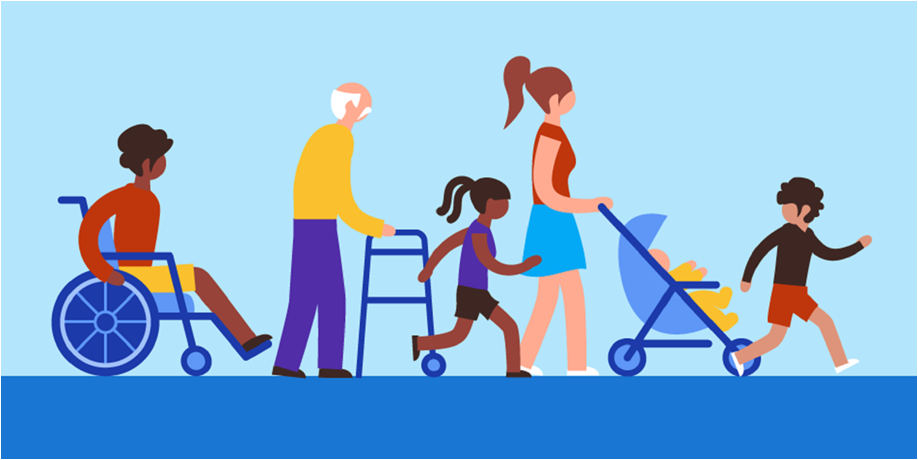
Inclusion is the process of welcoming and valuing every individual within society. Its goal is to create environments and services that are usable and accessible to everyone, regardless of age, physical ability, cognitive condition, gender, or cultural background.
Inclusion in the bathroom context
In the bathroom, inclusion translates into accessible and safe design for all, aimed at ensuring autonomy, comfort, and dignity for anyone who uses it (adults, children, elderly people, people with disabilities, parents with strollers, etc.).
Features of an inclusive bathroom
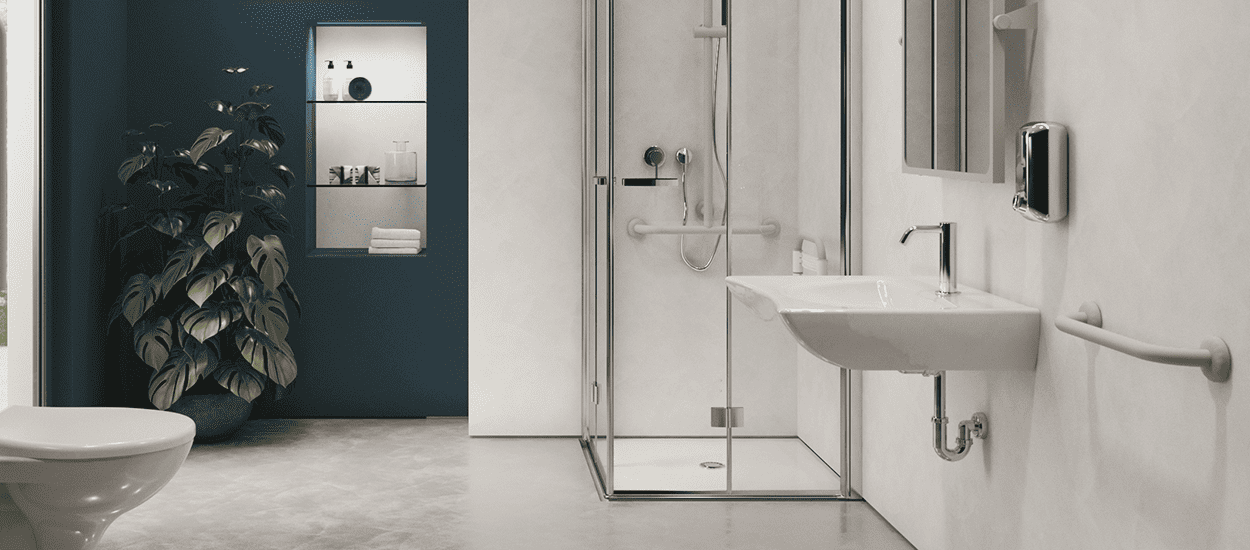
- Physical accessibility: sufficient space for wheelchairs or aids, wider doors, obstacle-free pathways and, where possible, non-slip flooring.
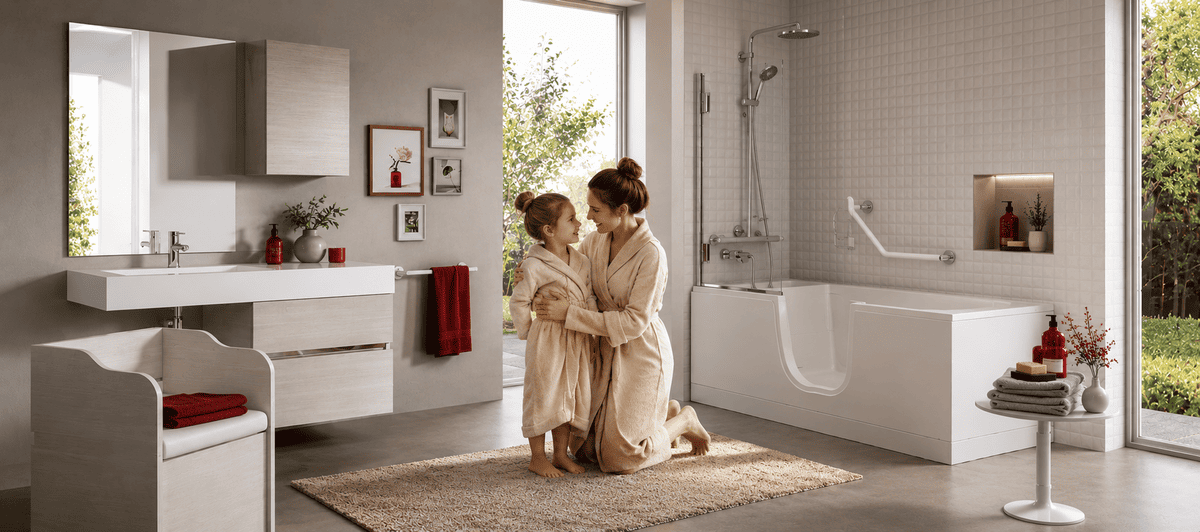
- Suitable sanitary fixtures and furnishings: toilets, sinks, and showers designed according to accessibility standards (e.g. appropriate height, grab bars, supports), with adjustability and flexibility.
- Safety and comfort: presence of non-slip grab bars, adequate lighting, easy-to-clean surfaces, non-irritating materials, and the use of touchless solutions (taps, dispensers).
- Neutrality and welcoming design: clear signage, spaces designed for comfort, warm colors and materials that make the environment less “clinical” and more welcoming.
An inclusive bathroom is a space that does not discriminate but instead guarantees independence: it is designed to be easily used by people of all ages and conditions, without physical, sensory, or psychological barriers. Designing bathrooms, whether private or for shared use, without architectural barriers, means creating welcoming environments that ensure autonomy and improve quality of life.