
Beyond Barriers: Toyota’s Robotic Chair and the Future of Freedom in Motion
At Goman, our daily mission is to make environments—starting with the bathroom—safe, functional, and dignified spaces. Today, however, we want to step beyond the walls of the home for a moment and look toward the horizon of global innovation, where technology is redefining the very concept of movement.
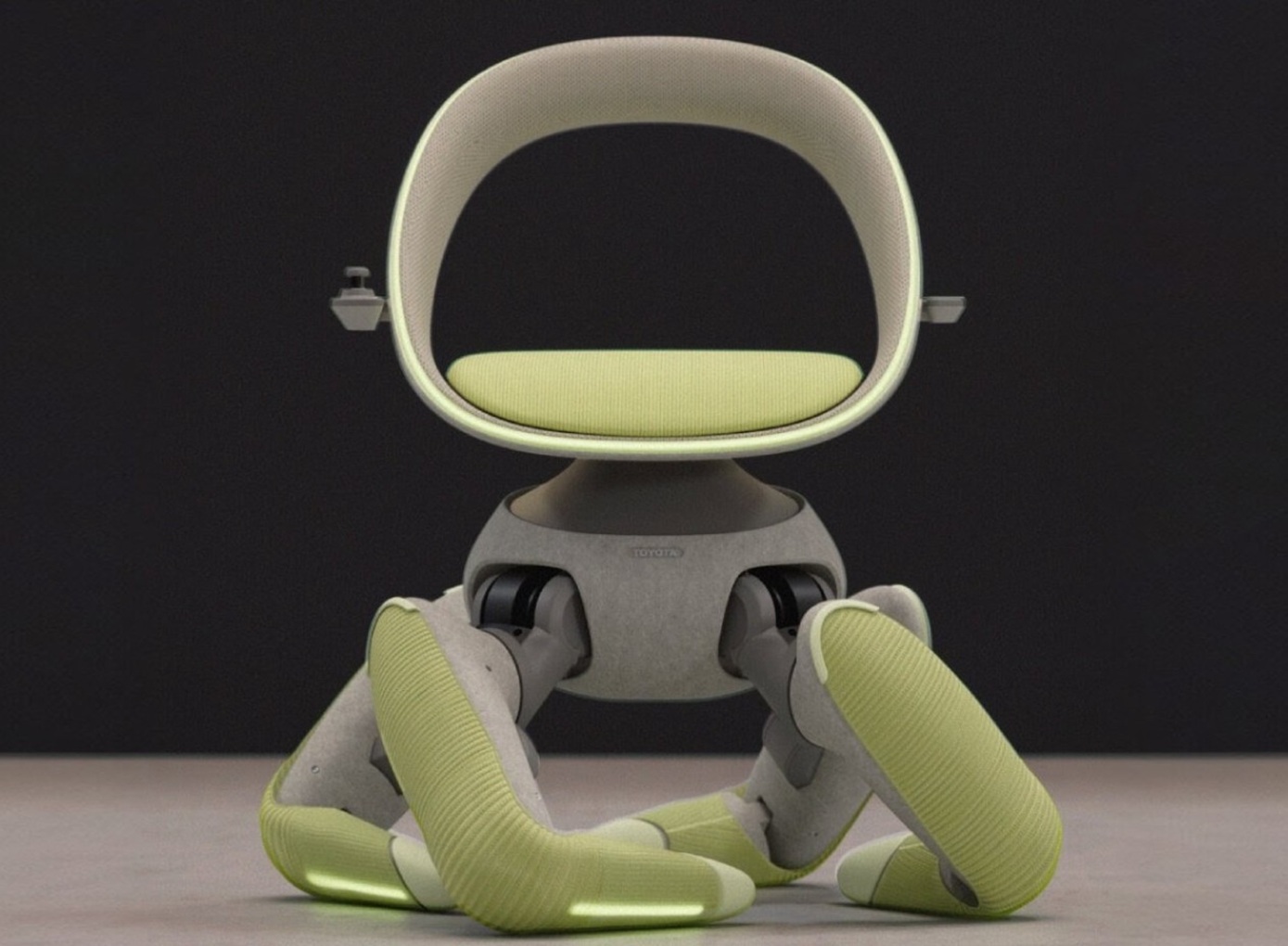
At the recent Japan Mobility Show 2025, a prototype was unveiled that looks like it came straight out of a science-fiction movie, yet addresses a very real need: Toyota’s Walk Me.
When legs replace wheels
For decades, the wheelchair has remained true to its name. But what happens when the terrain becomes hostile? Steps, uneven sidewalks, or small height differences can quickly turn into insurmountable barriers.
Toyota has chosen to challenge the wheel-based paradigm by drawing inspiration from nature. Walk Me doesn’t roll: it walks. Thanks to four robotic limbs, this chair can analyze its surroundings using LiDAR and radar sensors, “climbing” stairs and adapting its support base to any uneven surface. It is not just a means of transportation—it is an extension of human will.
A synthesis of stability and design
The technology behind Walk Me reflects many of the principles we apply in the design of our assistive solutions:
- Dynamic Balance: Advanced algorithms balance the user’s weight in real time, ensuring stability even on steep slopes or rough terrain.
- Intuitive Interface: Thanks to Artificial Intelligence, the chair can be guided by simple voice commands (“go to the kitchen”, “faster”), eliminating physical effort for users with limited mobility, including in the upper limbs.
- Adaptive Ergonomics: The seat is designed to follow the body’s natural lines, proving that aesthetics and comfort can coexist with maximum functionality.
The Goman vision: environments that adapt to people
There is a deep common thread between the safety we design for the static space of the bathroom and freedom of movement in the dynamic spaces of the city: the idea that the environment should adapt to the person, not the other way around.
In Italy, 2.9 million people live with severe limitations in daily activities (ISTAT 2025). With an aging population (7.2% of Italians face major difficulties in walking every day), accessibility can no longer be considered an “optional,” but a cornerstone of modern design. While we at Goman work to make the everyday act of self-care safer, Toyota’s innovation shows us how inclusive design can eliminate any remaining architectural barriers beyond the home.